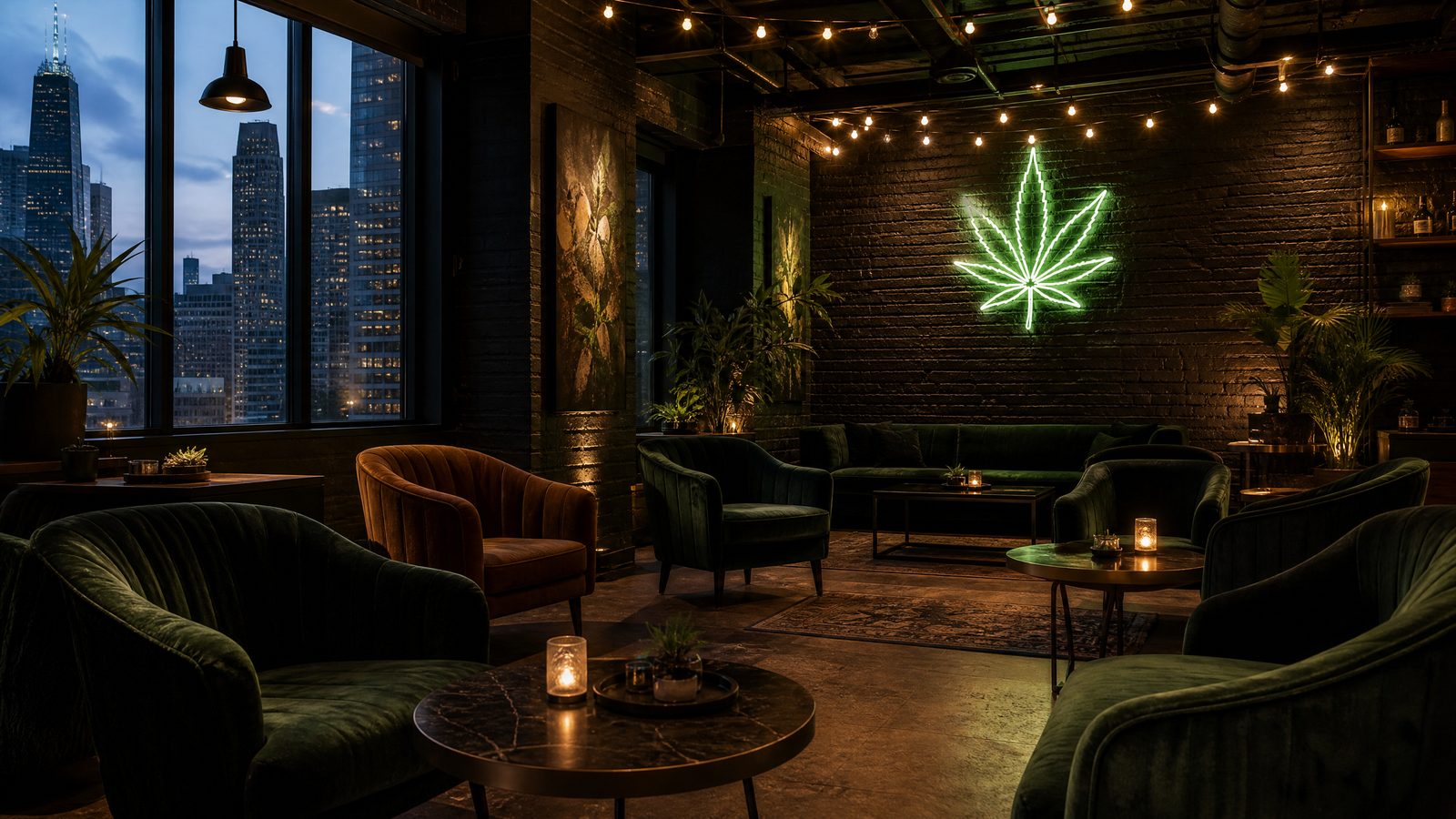
When a lounge does get approved, state rules require it to be physically separate from the dispensary sales floor, divided by a lockable door. Outdoor lounge areas face even stricter controls: they must be shielded from public view with fencing or screening, and staff must manage re-entry at all times. Entry runs through age verification, and lounges must submit staffing, security, and operating plans before opening.
What You Can and Cannot Do
Public consumption remains illegal everywhere in Illinois, including streets, parks, and the area directly outside licensed dispensaries. Consuming in a vehicle is illegal whether it is moving or parked. Cannabis must be stored in a child-resistant container and kept inaccessible to all vehicle occupants during transport. Cannabis purchased in Illinois can never be transported across state lines.
The Chicago Lounge Scene in 2026
What Exists in the City
Chicago's municipal framework keeps traditional smoking lounges rare, but alternative formats have grown. THC cafes serve infused edibles and cannabis beverages that customers consume on site without smoking anything. Members-only social clubs host private events where guests bring their own legally purchased products. Enforcement of the public-use ban in parks and along the lakefront means most of these venues operate discreetly and indoors.
Suburban Lounges Near Chicago
The clearest examples of approved lounge models sit in the suburbs, where local governments have passed authorizing ordinances. The Chicago area's first consumption lounge opened in the north suburbs in 2022 and operates as a private, bring-your-own space inside a dispensary property. Several suburban dispensaries now attach a small lounge or event room to their retail floor. Visitors staying in Chicago frequently take a short drive to these venues, since the rules there are well defined.
Private Clubs and Events
A private event format has become the most common workaround in the city itself. Promoters rent venues, verify IDs at the door, and let 21-and-older guests consume their own cannabis on private property, which is legal with the property owner's permission. These events typically sell tickets online and cap attendance, so checking local listings and Instagram pages of Chicago cannabis brands is the best way to find them.
Rules for Visiting a Lounge or Club
Age, ID, and Bringing Your Own Product
Bring a physical government-issued photo ID proving you are 21 or older. Most lounges and clubs are bring-your-own models, so purchase your cannabis from a licensed dispensary first and keep it in its original packaging. Dispensaries in Illinois are required to be open between 6 a.m. and 10 p.m., which shapes most lounge schedules.
House Rules to Respect
Lounges set their own policies on glass pipes, vaporizers, dabbing, and group size. Ask about venting, seating reservations, and whether staff can assist first-time users. Start with a low dose and wait before having more, since edibles and seltzers hit differently in a social setting. Never drive after consuming, and arrange a rideshare before your first puff.
Possession Limits That Apply Everywhere
Lounge rules do not change the underlying state limits. Illinois residents may possess up to 30 grams of flower, 5 grams of concentrate, and 500 mg of THC in infused products. Non-residents may carry half those amounts: 15 grams of flower, 2.5 grams of concentrate, and 250 mg of THC in edibles. Staying within your category matters, because exceeding limits while traveling to or from a venue can trigger enforcement.
Alternatives If You Cannot Find a Lounge
Edibles and Cannabis Beverages
For travelers who want a social experience without the consumption problem, edibles and cannabis drinks offer the simplest path. You buy them at a dispensary and consume them at your hotel or rental where property rules allow. If you are new to dosing, our edibles guide for beginners explains timing and portion sizes step by step.
Delivery to Your Accommodation
Chicago-area cannabis delivery is limited, and whether it is legal depends on your municipality. Some suburbs permit licensed delivery while others do not. Our Chicago weed delivery explainer covers where ordering is allowed and what alternatives exist for pickup.
Planning Your Purchase
If you are visiting Chicago and want to make one clean dispensary stop before heading home, our dispensary visit walkthrough (easily adapted to any Illinois shop) explains ID checks, budtender conversations, and checkout. For choosing between flower, vapes, and edibles, the onset and duration comparison helps you match products to your plans. Regional visitors can also browse the state-level overview on our Illinois cannabis laws page.
Frequently Asked Questions
Is it legal to smoke weed at a dispensary in Chicago?
No. Illinois prohibits cannabis consumption on dispensary property and in the surrounding public areas. Consumption lounges must be separately licensed spaces with their own local authorization, and Chicago has not broadly approved them.
Can non-residents visit cannabis lounges in Illinois?
Yes, if the venue accepts them. Most lounges and clubs welcome any 21-and-older guest with valid ID, though you must follow the non-resident possession limit of 15 grams of flower.
Why are there so few lounges in Chicago?
Illinois requires each lounge to have local government authorization plus state approval. Chicago's public-use rules remain restrictive, and the city has not authorized the traditional lounge model at scale, leaving the scene to THC cafes, private clubs, and suburban venues.
Do Chicago lounges sell cannabis?
Most do not. The prevailing model is bring-your-own, where guests buy products at a licensed dispensary and consume them in the lounge. Some THC cafes sell infused food and drinks instead.
Can I smoke cannabis in my Chicago hotel room?
Only if the hotel allows it, which most do not. Consuming in a hotel room without permission can violate both state law and the property agreement, and may result in cleaning fees or eviction from the booking.
Will Illinois create a statewide lounge license?
Legislation proposing a dedicated on-premises consumption license has been filed but is not law as of 2026. For now, lounge access continues to depend on local authorization, town by town.
Illinois legalized adult-use cannabis in 2020, and Chicago visitors quickly discovered a complication: buying it is easy, but smoking it legally is not. Public consumption is prohibited across the state, and Illinois leaves social use entirely up to local governments. That has created a patchwork of consumption lounges, THC cafes, and private clubs where adults can legally enjoy cannabis together. This guide explains how the lounge scene actually works in Chicago, the rules behind it, and where consumers are turning instead.
The Short Answer
Illinois allows cannabis consumption lounges only when a local government authorizes them and the state approves the specific location. As of 2026, the model exists mostly in the suburbs, while Chicago proper still operates under a public-use ban with a handful of private and membership-style venues. You must be 21 or older, bring your own legally purchased cannabis to most lounges, and never drive after consuming.
| Question | Quick Answer |
|---|---|
| Are lounges legal statewide? | No. They require local authorization plus state approval. |
| Do lounges sell cannabis? | Usually no. Most are bring-your-own spaces attached to or near dispensaries. |
| Minimum age | 21 with valid ID |
| Public consumption in Chicago | Illegal on streets, in parks, and near dispensary doors. |
| Resident possession limits | 30 g flower, 5 g concentrate, 500 mg THC in edibles |
| Non-resident possession limits | 15 g flower, 2.5 g concentrate, 250 mg THC in edibles |
How Illinois Consumption Lounges Work
The Local Authorization Requirement
Illinois did not create a statewide lounge license. Instead, the Cannabis Regulation and Tax Act allows on-site consumption only where a city, village, or county takes action to authorize it and the state's Department of Financial and Professional Regulation (IDFPR) approves the specific site. Many municipalities never pass authorizing ordinances, which is why lounge access varies so dramatically from town to town.